How Logos works
Start with the music, then work with the material. Trevor calls that move from suggestion toward understanding and truth the Chiral Bridge.
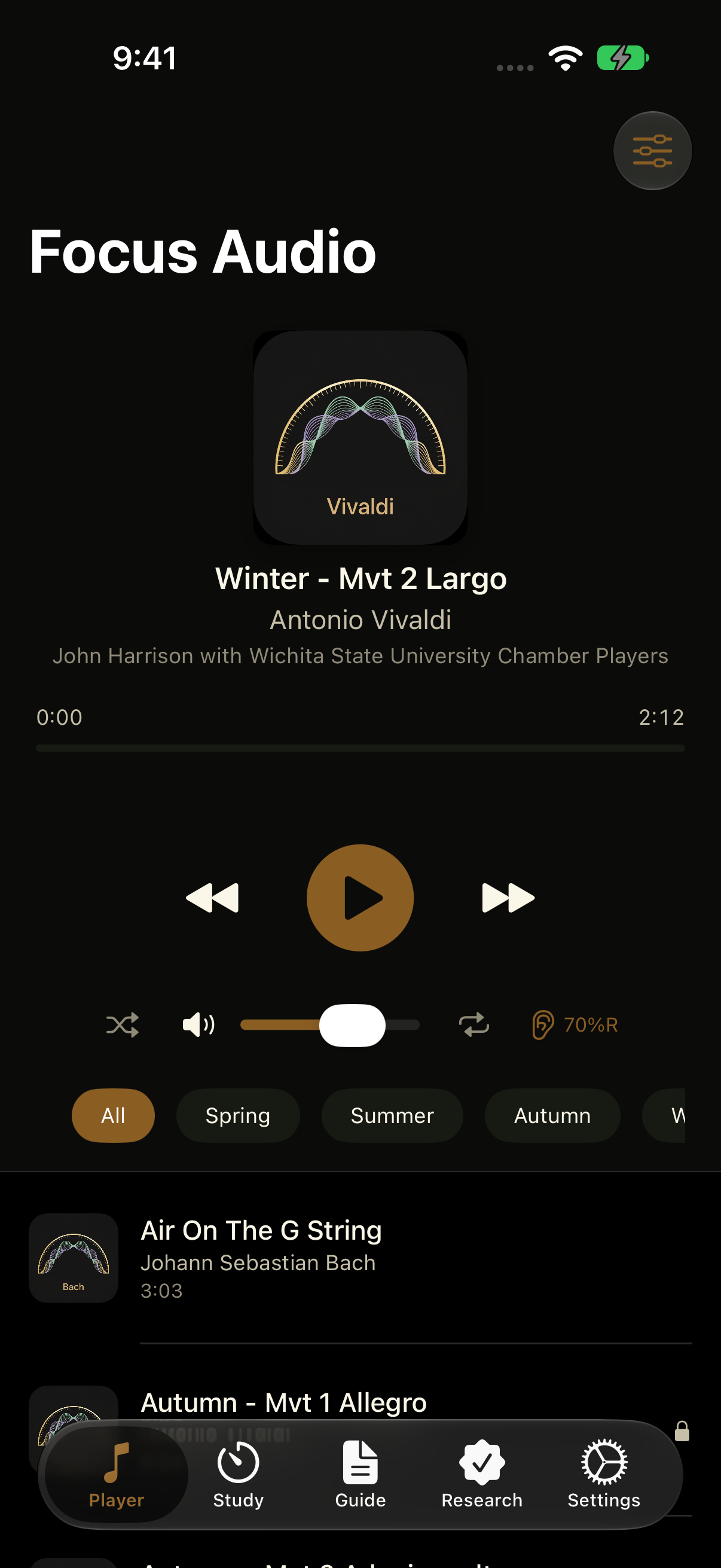
60 BPM: where the listening path begins
Start with one of the free instrumental Baroque recordings. The 60 BPM reference comes from Bancroft's 1975 account of the Lozanov classroom: she described a steady bass pulse in the slow movements and compared it with a slowed human pulse. That historical session helped shape the opening stage of Logos. The app plays each recording at its own tempo, with a default music filter and a right-ear balance you can switch off. Premium lets you adjust the filter intensity.
72 BPM: the understanding stage
Once you are working with the material, Premium lets you add a proprietary 72-step Chiral Filter. Its 72 BPM timing reference runs beside the music while the recording keeps its own tempo. Leave it off, turn it on, or adjust its strength as you listen and study.
The Chiral Bridge
Hearing an idea is a beginning. You still have to read it, question it, try it, and see what holds up. Logos calls that move from suggestion toward understanding and truth the Chiral Bridge. The historical 60 BPM listening reference and the filter's 72 BPM timing give that move a structure you can hear while you do the work.
If you want to follow where those ideas came from, the research timeline starts with the original listening and learning records.
Make room for the work
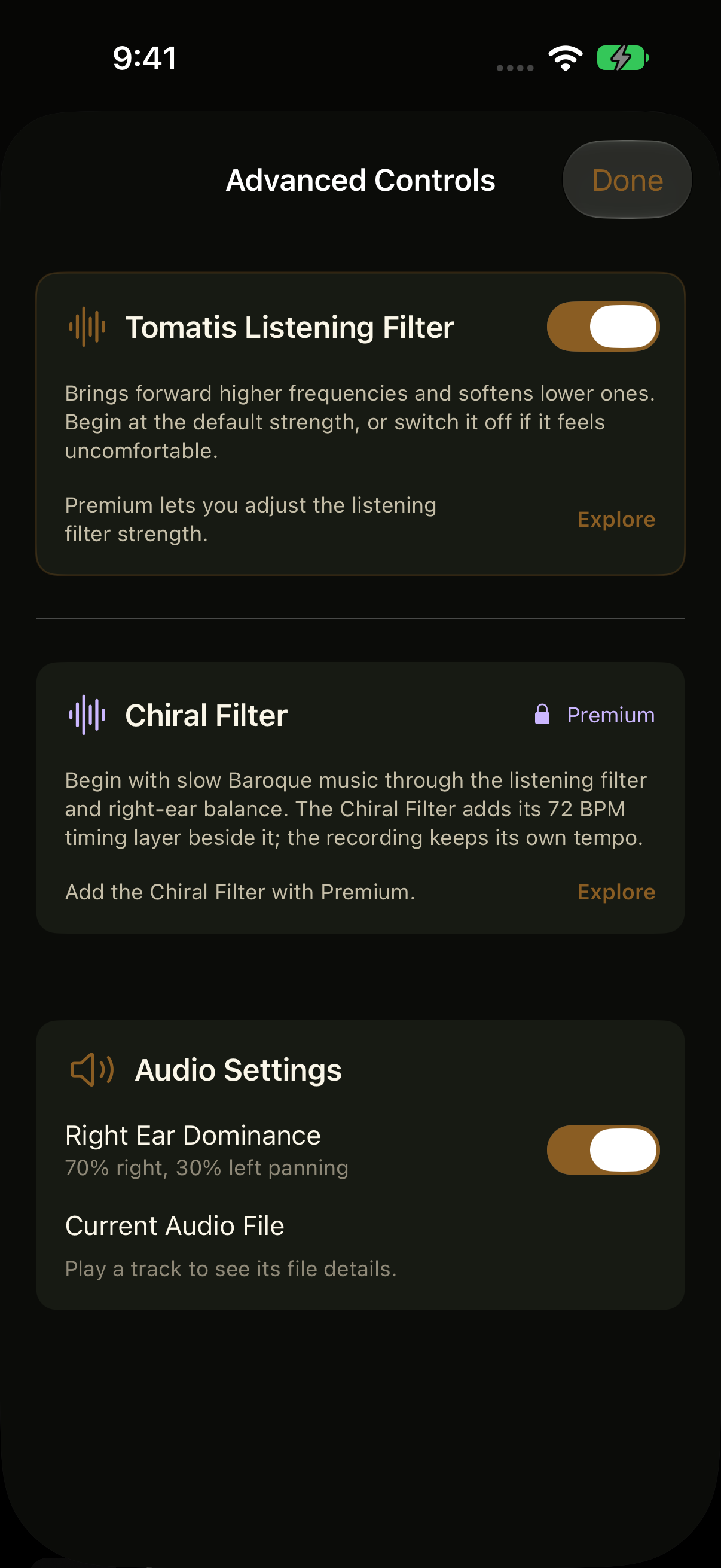
The Free controls shown here let you switch off the default music filter or right-ear balance. If you want to shape the listening path further, Premium opens filter intensity and the Chiral Filter.
Pick a subject, then give it the time it needs. Free sessions are 25 minutes, Premium adds 45- and 90-minute options, and Pro lets you choose anywhere from 15 minutes to three hours. Logos records completed sessions so you can see what you returned to; Pro also lets you note how a session felt.
Follow the research
The research library begins with original records from the 1920s through the 1990s and follows the questions that shaped Logos: how people listen, what music has done in learning settings, and how a study session can be structured. You can open the sources and see the people, tasks, and findings behind each entry.